Donate to Brooks Historical

Showing posts with label jolly roger. Show all posts

Sunday, April 09, 2017

Dictionary of Pyrate Biography - in the Works!


Roberts, Thomasserved as third mate of a Guinea-man or slave ship out of London, Capt. Plummer, and taken by a pirate – he thus became a pirate himself and was voted Captain in Nov 1718; in Rhode Island-built sloop with briganteen pirate consort, near Barbados – fought with governor’s forces: Capt. Rogers, in 20-gun galley and Capt. Graves in a sloop, which wounded his sloop and ran off the briganteen, Jan 1720; Roberts then sailed to Granada to careen, and in spring of 1720, with 45 men, came to Newfoundland, first to Ferryland, ca. 14 Jun 1720; into harbor of Trepassey, a small fishing community located in Trepassey Bay on the south eastern corner of the Avalon Peninsula of Newfoundland and Labrador - Roberts ran the narrow harbor with 22 sails and 250 Shallops with flag of “Death’s Head and Cutlash,” 1,200 men fleeing all ships to the shore – pirates burned all ships but a Bristol Galley, Capt. Capleston, which they kept – nine or ten sail of Frenchmen which Roberts burned except a 26-gun Frenchman, to whom Roberts traded his galley, 21 Jun 1720; in the latitude of 44 degrees, about 30-40 leagues east of Newfoundland, in command of two pirate vessels, one ship of 26 guns and a sloop of 10 guns, with about 100 English men, took ship Samuel of London, Capt. Samuel Carry, 13 July 1720; captured a snow from Bristol, Capt. Bowls, and forced his crew as they did with Capt. Carry, 14 July 1720; designed for Western and Canary Islands and southward to “Island of New Providence, possest by Negroe’s, in South Latitude 17 [more like 25] which they say is the Pirates General Rendezvous, where they have a Fortification and a great Magazine of Powder, &c. where they intend to spend their Money with the Portuguize Negro Women.”[1]
Guineaman or Slave Ship, similar to Blackbeard's Queen Anne's Revenge
Excerpt from Boston News-Letter, 22 Aug 1720, account about Carry’s vessel:

The first thing the Pirates did, was to strip both Passengers and Seamen of all their Money and Cloths which they had on board, with a loaded Pistol held to everyone’s breast ready to shoot him down, who did not immediately give an account of both, and resign them up. The next thing they did was, with madness and rage to tare up the Hatches, enter the Hould like a parcel of Furies, where with Axes, Cutlashes, &c, they cut, tore and broke open Trunks, Boxes, Cases, and Bales, and when any of the goods came upon Deck which they did not like to carry with them aboard their Ship, instead of Tossing them into the Hould again they threw them ober board into the Sea; The usual method they had to open Chests was by thooting a brace of Bullets with a Pistol into the Key hole to force them open: The Pirates carried away from Capt. Carry’s Ship aboard their own 40 barrels of Powder, two great Guns, his Cables, &c. and to the value of about nine or ten Thousand Pounds Sterling worth of the Choicest Goods he had on board. There was nothing heard among the Pirates all the while, but Cursing, Swearing, Dam’ing and Blaspheming to the greatest degree imaginable, and often saying they would not go to Hope point in the River of Thames to be hung up in Gibbets a Sundrying as Kidd & Bradish’s Company did, for if it should chance that they should be Attacked by any Superiour power or force, which they could not master, they would immediately put fire with one of their Pistols to their Powder, and go all merrily to Hell together! [And, in utter defiance of the king’s authority:] They often ridicul’d and made a mock at King GEORGE’s Acts of Grace with an Oath, that they had not got Money enough, but when they had, if he then did grant them one, after they sent him word, they would thank him for it.[2]

Excerpt from American Weekly Mercury, 22 Sep 1720:

… a small Sloop of 12 Guns and 160 Men, Entered Trepassy on Tuesday the 21st Instant, and made himself Master of the said Harbour, and all the Ships there, being 22 Saill, and 250 Shallops. He made the Masters all Prisoners, and beat some of them heartily for their Cowardice in not making any Resistance… The Captain was never on shoar himself but 40 or 50 of his Men go on shoar at a time, and gets all Hands Drunk, along with such Fishermen as remains in the Harbour. He fires his Evening and Morning Gun at which last all the Masters are to go on Board to receive their Orders for the Day, one was that no House, Chest, or Locker, &c., should be locked while he remains there, under Pain of severe punishment… on Saturday last the 25th… they saw a great smoak in the Harbour, which they believed was occasioned by the burning of the Ships, which the Pirats had threatened to set on Fire, &c.[3]
 
Image extracted from page 694 of North Atlantic Directory. The physical geography and meteorology of the North Atlantic …, by ROSSER, William Henry (1869). Original held and digitised by the British Library.

-------------------------------
Thomas Roberts seems incredibly fortunate, if surreal. He is an example of the more "piratish" of the New England pirates of the Golden Age, and is clearly a different type of pirate from the earlier gentlemen like Thache, Jennings, Ashworth, and other wealthy men of Jamaica and Bermuda. There is also the hint of continued use of New Providence Island by Roberts and other pirates two years after Woodes Rogers had supposedly run them off... assuming that the pirates had not referred to a new rendezvous just south of Jamaica - equal in latitude to Roatan Island or Martinique - a place filled with exotic ladies of the evening and, no doubt, other expensive distractions on which to spend their ill-gotten gains! America was a pirate abode - a virtual Disneyland for these wild English outcasts... 
This entry on Thomas Roberts is an example of one of the entries in Dictionary of Pyrate Biography, derived from primary source references to pirates and the celebrities effected by them. This volume is the first and includes the years 1713-1720, or from the end of Queen Anne's War to two years after the death of Edward "Blackbeard" Thache. 

Essentially, during this period, American piracy had gone from the idea of revolution to outright rebellion or wild abandon. 

The earliest pirates from the Caribbean fished the eleven Spanish wrecks of 1715 on the Florida coast and found a glorious opportunity in this to finance their separation from a differentiating British Empire. The time, however, was not right... they had quit early thanks to lack of desire to defy their government and the king's generous pardon or Act of Grace, a chance to start over with a clean slate. By 1720, however, the idea of revolt had caught on with many pirates of the less-restrained or poorer sort, from New England and the Bahamas, a place of utter destitution. The study of primary sources alone make this clearer than reading the biases of many pirate writers, especially the polemical Charles Johnson, who was merely trying to seek his own brand of literary treasure. Johnson never mentioned Thomas Roberts, by the way.
Look for this book to be published in late 2017. Been pushed up to 2020 - 1/19/2020.


[1] Boston News-Letter, 22 Aug 1720, 2; American Weekly Mercury, 22 Sep 1720, 3.
[2] Boston News-Letter, 22 Aug 1720, 2.
[3] American Weekly Mercury, 22 Sep 1720, 3.


--------------------------------------------------

http://www.lulu.com/spotlight/bcbrooks


"Quest for Blackbeard" is now available in ebook format and can be found on Amazon, Barnes & Noble, and other online booksellers, including Apple iTunes.

Quest is already previewable on Google Books.

baylusbrooks.com

Saturday, June 25, 2016

Thache Captures La Concorde or Queen Anne's Revenge

QAR at the island of Bequia
Until other primary evidence appears to support Johnson-Mist’s claim and effectively disputes the French depositions, Edward Thache must be credited for the capture of La Concorde or Queen Anne's Revenge. Too much reliance has traditionally been placed on Johnson-Mist’s work. Even Angus Konstam, who had the French evidence available to him and performed an excellent analysis of these events, still became confused and still referred to Thache as Hornigold’s “pupil” and “former protégé,” and Hornigold as his “mentor.”  Again, there is no reason to assume any of this, aside from Johnson-Mist’s erroneous revision. This bias still plagues every good analysis. 

There is a document preserved at the Centre des archives d’outre-mers in Aix en Provence, France, dated December 10, 1717, that illuminated the results of this event. Written by one Mesnier, the Steward of Martinique, it stated:

The 7th of this month arrived here a ship captained by Pierre Dosset [of] Nantes with 246 negroes, black women, black male female children under 13 [later totals from two trips were quoted at 171 males, 147 females, 47 boys, 9 girls, and total of 374]. This captain left Nantes[, France] on April 12 last commanding the ship La Concorde to trade Negroes on the coast of Guinea [Africa] where it had arrived on July 8 and, after trading 516 negroes left 2 October to make his return to this Isle. But on 28 November, being 60 leagues from here by 14 degrees by 27 minutes of latitude north, having been attacked by two English pirate ships, one 12 and the other of 8 guns armed with 250 men commanded by Englishman Edouard Titche, was taken by the pirates with 455 Negroes, who left said Dosset with his crew in the Grenadines on the island of Bequia near Grenada.
Sample of December 10, 1717 correspondance of Governor François de Pas de Mazencourt, marquis de Feuquières of the Windward Islands, FR ANOM COL C8A 23 F° 39.

René Montaudoin, owner of La Concorde (later, QAR), operated his slave trade from the French port of Nantes.  Generally, they would pick up a cargo on the West African coast and sail them to the West Indies.  This last voyage of 1717 was the third of its career under Montaudoin’s ownership. Disease and the hardships of the Middle Passage claimed sixteen crew and sixty-one of 516 total slaves. Depositions by Captain Pierre Dosset and Lieutenant Francois Ernaut explained the events of their capture by Thache on November 28, 1717. Ernaut testified that two pirate sloops attacked the slave ship La Concorde: one with 120 men and twelve cannon, and the other with thirty men and eight cannon (see figure). This estimate was 100 pirates shy of his captain’s.  

Edward Thache captured QAR without Benjamin Hornigold's help... regardless of what that literary pirate Capt. Charles Johnson may have written 300 years ago.


---------------------------------------------------------


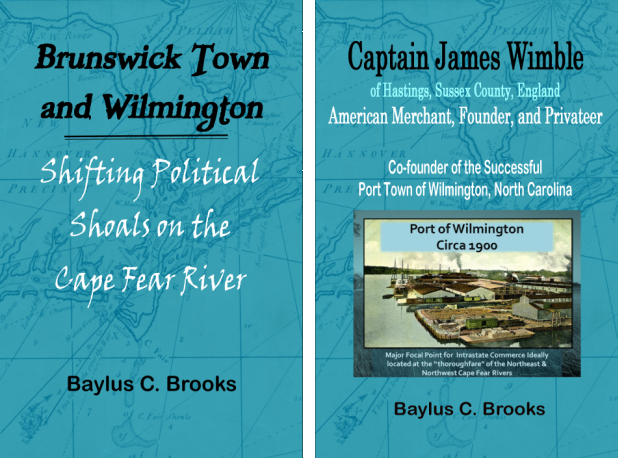
Read about North Carolina's piratical birthpangs in the Brunswick Town & Wilmington affair and the hero that saved the Port of Wilmington from the Family's political opposition, Capt. James Wimble


Both can be found at the author's Amazon page and at Lulu.com

And, coming:


From the author of Blackbeard Reconsidered! 


Sunday, July 05, 2015

Blackbeard's Capture of La Concorde or the Queen Anne's Revenge: the French Documents

Title page from A General History of the Pyrates by Capt. Charles Johnson [Nathaniel Mist], 2nd ed., published in December 1724.
Author of A General History of the Pyrates, Capt. Charles Johnson (who we know today was Jacobite newspaper publisher Nathaniel Mist) wrote that: "In the Spring of the Year 1717, [Edward "Blackbeard"] Teach and Benjamin] Hornigold sailed from Providence, for the Main of America, and took in their Way a Billop from the Havana, with 120 Barrels of Flower, as also a Sloop from Bermuda, Thurbar Master, from whom they took only some Gallons of Wine, and then let him go; and a Ship from Madera to South-Carolina, out of which they got Plunder to a considerable Value" and following these events, that "After cleaning on the Coast of Virginia, they returned to the West-Indies, and in the Latitude of 24, made Prize of a large French Guiney Man [La Concorde, later Queen Anne's Revenge or QAR], bound to Martinico, which by Hornigold’s Consent, Teach went aboard of as Captain, and took a Cruize in her; Hornigold returned with his Sloop to Providence, where, at the Arrival of Captain Rogers, the Governor, he surrendered to Mercy, pursuant to the King’s Proclamation."

Woodcut images from the first two editions of A General History by Capt. Charles Johnson. The first edition claimed "Thatch" was from Jamaica, but the second edition claimed him to be a "Bristol man born" named "Teach". The editions differed most in that Thache was paired with Stede Bonnet in the first edition, but with Benjamin Hornigold in the second. Why the variation?

Johnson/Mist wrote this passage in his second edition (December 1724), published a few months after the first (May 1724). These two editions are quite different. The first edition claimed "Thatch" was from Jamaica, but the second edition claimed him to be a "Bristol man born" named "Teach". The editions differed most in that Thache was paired with Stede Bonnet in the first edition, but with Benjamin Hornigold in the second. Most primary sources [generally, the Boston News-Letter] tell of Thache paired with Stede Bonnet. Only one report tells that Hornigold joined them in mid-October 1717 off the Virginia capes. Did something happen in those intervening months to change Mist's impression of Thache?Why did he suddenly make Hornigold Thache's mentor or master?

Historian Arne Bialuschewski, researching in Jamaica, found the deposition of Henry Timberlake in which he testified as to Hornigold and Thache sailing together (presumably in separate privateer vessels as Henry Jennings, James Wills, and Samuel Liddel had done the year before) to fish Spanish wrecks on the coast of Florida. This record from Jamaica was previously unknown to us today. The eleven wrecks were part of a flotilla of Spanish treasure ships caught in a hurricane and wrecked on July 30, 1715 near Cape Canaveral. Thache, who then lived in Kingston, joined Hornigold around the latter part of 1716 - perhaps part of early 1717. This happens to be when Johnson/Mist asserts that Thache met Hornigold in his second edition. It is not known if Thache had fished the wrecks before or if he and Hornigold received privateer commissions like Jennings, et al had. 

"X" Marks the Wreck Site from July 30, 1715

Johnson/Mist probably learned of this deposition after penning his first edition and and wrote his second edition which detailed Hornigold as Blackbeard's master with Blackbeard starring as the eager pirate pupil. He changed significant sections of text on both Thache's and Stede Bonnet's chapters. 

Mist, the polemicist, wrote from the standpoint of a financially-deprived criminal biographer and may have wanted his greatest and most "notorious" pirate to be shown receiving the wisdom and training of the "great pirate master," Benjamin Hornigold. The literary effect alluded to Eve plucking the apple from the Tree of Knowledge, unleashing evil upon the world. The bestowing of the QAR made the perfect "apple." Johnson/Mist may have waxed more rhetorical as he revised his first edition - and as he was frequently required to post bail and pay heavy fines.

Johnson's fantastic creation doesn't quite meet with reality. To be mentioned in the deposition implied that Thache was a significant player (not just now, after building a "notorious" reputation, but even in December 1716, when he essentially had no reputation), an independent mariner, not merely a crewman aboard Hornigold's ship. Furthermore, there is clear documentary evidence that Hornigold was not in command of the pirates that took La Concorde [QAR], as Johnson/Mist asserted in the second edition. The original pairing of Thache with Barbadian aristocratic pirate Stede Bonnet from the first edition seems more likely. 

Johnson/Mist must have assumed that Thache and Hornigold stayed together after December 1716, but they were probably never really "together" anyway. They can be found on the island of New Providence in the Bahamas as equals in July 1717, but there is no reason to assume that they were anything more or less before or then.

There are no contemporary images of Queen Anne’s Revenge, formerly the French slave ship Concorde. Archaeologists believe that the 1730 French merchant ship Mercure, shown here, was close in size and rig to the pirate ship.

The critical moment from which to judge the accuracy of Johnson/Mist's narrative was the capture of La Concorde, which Johnson/Mist attributes to Hornigold and Thache as his subordinate. This occurred November 28, 1717. Recently discovered French documents, detailed by Jacques Ducoin for the North Carolina Department of Cultural Resources Division of Archives and History expose Johnson/Mist for a fraud. 

[Documents held in Archives départementales de Loire-Atlantiquea Nantes, les Archives nationales Paris et la section outre-mer des Archives nationales a Aix-en-Provence.] These French documents have been published as Jacques Ducoin, "Research Report in French Archives Nantes on the ship La Concorde captured by pirates in 1717," North Carolina Department of Cultural Resources Division of Archives and History (July 2001).
The details, independent of Johnson/Mist, were recorded by depositions given to French authorities by Capt. Pierre Dosset and his crew following the incident and even some months after the incident. These depositions neither mention Hornigold by name nor do they mention a ship as large as thirty-six guns, which Hornigold allegedly captained at the time, the Ranger.

The first document to appear after the capture came from Capt. Pierre Dossett when he made his report December 10, 1717 to Mesnier, steward of the Martinique:


"... on 28 November, being 60 leagues by 14 degrees by 27 minutes of latitude north, was attacked by two English ships pirates, one 12 and the other of 8 guns armed 250 men commanded by Edouard Titche Englishman."


Thache came directly from the Delaware Capes where, on 12 Oct 1717, he took Capt. Lindsey and then proceeded to the Virginia Capes where, on 18 Oct 1717, he and Benjamin Hornigold (in his 36-gun Ranger) worked together to take Capt. Prichard from St. Lucia. Perhaps this gave Thache the idea to head east of Martinique to capture La Concorde, or some other rich slave ships coming from the coast of Africa. Thache parted from Hornigold and sailed south from the coast of Virginia, probably traveling through the Florida Channel, north of Santo Domingo, where another pair of pirates, one with a 12-gun ship like Thache's, captained by one "Nicholas" took a French vessel on 20 Oct 1717. It would be impossible for this to have been Thache because he could not have gone that far in only two days, so the first report of it being him was wrong. He could easily have made Martinique by 28 Nov 1717, however, to take La Concorde. NOTE: It is interesting to conjecture that Thache may have received some intelligence about the French Nantais slave ship that induced him to travel south at the same time. The documents mention how friendly the inhabitants of Santo Domingo,  St. Vincent, and the Grenadines were to the pirates. Presumably, this was a general American attitude as opposed to British. Perhaps Capt. Prichard from St. Lucia, an island in that chain, or someone on his ship told Thache about expecting a large slave shipment to Martinique. Thache then rushed to that area to take advantage of the opportunity.

-------------------------------------------------

Edward Thache's Flag? Or Edward Low's?
Pirate flag usually attributed to Edward Thache. Confirmed to be the flag of the pirate "Nicholas" (without heart and blood drops) by a description given by the captain of a French ship taken in October 1717 before La Concorde was taken the next month by Thache. This ship was the St. Michel. The entire flag, including the heart and blood drops, actually appears in newspaper records in 1723 as that of Edward Low's.
These French documents also provide a surprisingly detailed description of the flag of a "large pirate ship" which confirms most of the flag details accepted by Blackbeard scholars today: "a black flag with a skeleton in the middle of a hand holding a dart and the other a clock." In fact, Jean Dubois, the captain of St. Michel, taken by pirates the previous October 20th, claimed that both pirate ships flew this flag. The pirate ships he described as a "British ship of 12 guns and 135 crewmen and the second pirate boat armed with 4 guns and 35 crew," which at first sounds like Thache and company. Captain of La Gracieuse, however, stated this pirate to be named "Nicholas." The only detail of the "accepted" Blackbeard flag not mentioned was the heart and blood drops. Dubois also mentioned a second flag of the "same color with a figure of a man who takes another under the feet that crosses his throat" on the secondary mast.

Note that Clifford Beal in Quelch's Gold: Piracy, Greed, and Betrayal in Colonial New England tells how the flag now attributed to Edward Thache, including the "three drops of blood" was once attributed to New England pirate John Quelch.  Beal states that no documentary evidence supports this and that it "appears to be an embellishment from an Edwardian-era [1901-1910] historian." This historian's name is not given. Interesting indeed that this flag is described accurately in the French depositions, though without the blood detail.


Edward Low's flag, however, is described in Mark G. Hanna's Pirate Nests and the Rise of the British Empire, 1570-1740, including all the details usually attributed to Edward Thache, on page 370 and 370n10:

When members of Edward Low's were executed in Newport in July 1723, newspapers reported that they were hanged upon the gallows, under "their black flag, with the Pourtrature of Death having an Hour-Glass in one Hand, and a Dart in the other, at the end of which was the Form of a Heart with three Drops of Blood falling from it... this flag they called Old Roger [reference to the devil], and often us'd to say they would live and die under it."
Reference: New England Courant (Boston), July 15-22, 1723; and...

... the crew hanged "under their own deep Blew Flagg which was hoisted up on their gallows, and had pourtraid on the middle of it, an Anatomy with an Hour-glass in one hand and a Dart in the Heart with 3 drops of Blood proceeding from it, in the other."
Reference: Boston News-Letter (Boston, Massachusetts), Thursday July 18, to Thursday July 25, 1723,  Page [2] (shown in pic below)

Boston News-Letter of July 18-25, 1723
 
This description is the exact one later used to describe the flag of Edward "Blackbeard" Thache, including the heart and blood drops, but no known primary source attributes this flag design to Blackbeard.

 -------------------------------

The two ships: Stede Bonnet's 12-gun Revenge that he had built specifically to go "a-pirating" and the smaller vessel originally owned by Edward Thache or the "6-gun [with various size references]" smaller vessel described by Capt. Matthew Musson in New Providence earlier in July were apparently not the ones who plundered the St. Michael or flew the traditional "Blackbeard" flag. This record is important, for the traditional "Blackbeard" flag has never been recorded on Edward Thache's ship... but it has on another pirates'!

Thache met Bonnet and taken command of his 12-gun Revenge the previous month of September when Bonnet may have shown up at New Providence wounded from his Spanish encounter, as researcher Colin Woodard believes. Thache had the smaller vessel prior to their partnership of then six guns, perhaps his original ship from fishing wrecks with Hornigold and taking Henry Timberlake's Lamb, then of eight guns - maybe the one he used as a merchant-mariner living in Kingston. Either way, if the pirates who took the St. Michael had been Thache and Bonnet, the smaller ship would had to have been losing cannon quite a lot! Still, there were many pirates in the Atlantic waters at this time. The pirate using the traditionally-accepted "Blackbeard" flag did not have to be Blackbeard. It might have been "Nicholas" or even John Quelch... or even Blackbeard, assuming that the pirates were prone to excessive plagiarism.

The captain of the La Gracieuse, stated "Nicholas" to have taken him on October 20th: "the largest armed boat of 12 pieces of cannon and 140 men the small boat was armed with four guns and equipped with 30 or 35 men." This almost is the same description as Thache and company. The French vessels mentioned captured by Thache or "Nicholas" were "namely the ship St. Jacques de Bordeaux, Captain Bergeron, a ship of [La] Rochelle called Caille, captain Haudeberd, Gracieuse de Nantes, Captain Francois Barbier."

Two conclusions stand out from studying these documents. The first is that Benjamin Hornigold was definitely not with Edward Thache after mid-October 1717 and not present for the capture of La Concorde, or the QAR. My research has shown that he was working alone, except for Stede Bonnet riding along "studying books in his cabin" for most of the summer after mid-July when they cruised to New England. Bonnet had ill-advisedly attacked a Spanish Man-of-War near South Carolina in August and was recovering from injuries sustained that day, which gave Thache the opportunity to use his bigger and newer Barbadian-built ship. Thache apparently was happy to have the bigger ship and didn't care what Bonnet did in the meantime. Thache briefly met with Hornigold just off the Virginia Capes in early October 1717, right before Thache began his run against the French in the Caribbean. 

Comparison Chart showing the incidence of partnership between Edward Thache and both Benjamin Hornigold and Stede Bonnet in the first two editions of A General History, by Capt. Charles Johnson. These are then compared to other primary records. It appears that Johnson/Mist may have suppressed certain newspaper reports to accommodate the information found in his second, generally most accepted edition. Johnson/Mist intentionally altered his use of primary sources for the December 1724 edition as opposed to the May 1724 one. Chart created by Baylus C. Brooks.
The second point is that the French documents reveal a number of French vessels of which most American pirate scholars have not previously been aware. The general belief by most American scholars (and by Johnson/Mist as well) might be that he preyed almost exclusively upon English ships, for those were the incidents most reported by the Boston News-Letter and recorded in English Admiralty documents.  Thache, however, may have preyed more upon his former enemies in Queen Anne's War: the French and Spanish. Media bias kept Englishmen and, thus, Americans, from knowing full well the total of ships that these pirates may have captured. Thache may have exemplified Hornigold's sentiments that the pirate "Flying Gang" at the Bahamas only took foreign ships unless otherwise threatened. Thache certainly preyed on quite a few English ships, but there were many French ships listed here and we still most likely have not heard about all the Spanish and Dutch ships that were taken. How many more nations other than English? That's the question.

This ideology/method would easily reflect my recent discovery of Thache as an old Royal Navy man, not likely to become a pirate easily. As a possible privateer from Jamaica with a "legal" commission from its governor, he merely fished castaway Spanish silver and gold on the coast of Florida after the hurricane of July 30, 1715. The arrest of Gov. Hamilton may have disrupted his income sufficiently to begin the pirate trade and reside with others at New Providence.

La Concorde was a massive fifth-rate ship carrying as many as forty guns. Few of these vessels existed in American waters at that time. The ex-Royal Navy man Thache became a serious threat when he captured that French slaver. It was famously wrecked in June 1718 in Beaufort Inlet and has been giving up its secrets for more than fifteen years now to the QAR conservation lab at East Carolina University. Artifacts are on display at Beaufort Maritime Museum in Beaufort, North Carolina

Edward Thache's eventual demise at Ocracoke Inlet in North Carolina may have been politically-motivated. A Royal Navy pirate may have been quite rare and more than a little embarrassing. Furthermore, he operated in American waters where the residents generally liked their pirates. Only politically changing Whiggish (liberalizing) Britain did not. The Board of Trade sought to eradicate piracy in the Americas. It could not have been an easy task. They had to politically battle pirates of the "Golden Age" and, thus, it's "Pirate King" Blackbeard to rid him from the British Empire's seas... in other words, keep him out of their pockets!

Thanks to A General History, most think of Golden Age pirates as "thieves" or "murderous rogues," without money or political power. Do we think this way because of later 18th-century politics? Apparently, they were not all like this. Golden Age pirates may have been the first American revolutionaries and Blackbeard the first Gen. George Washington! Their "revolution," however, failed. America finally gained its independence a half century later...

I've been told that the only difference between a "revolution" and a "rebellion" is who wins. Obviously, Britain won this first round and they reserved the right to control its history. They may also have erased any trace that we could find of Thache's service aboard the HMS Windsor during Queen Anne's War, circa 1706. Still, it would be nearly impossible to catch them all, especially on Thache's home island of Jamaica! Wouldn't it be cool to think that they tried?

****************************

http://baylusbrooks.com

The July 2015 issue of North Carolina Historical Review has featured an article by Baylus C. Brooks titled "“Born in Jamaica, of Very Creditable Parents” or “A Bristol Man Born”? Excavating the Real Edward Thache, “Blackbeard the Pirate”"

This publication will feature a genealogical chart of the Thache family, from Gloucestershire to Jamaica. Finally, after almost 300 years of misinterpretation, this genealogy is the documented and definitive family history of "Blackbeard the Pirate." This heavily researched and verified chart has been enhanced and reproduced in multiple poster sizes available on Zazzle.com

Genealogical Chart of Edward Thache, aka "Blackbeard the Pirate" - Copyright 2015 Baylus C. Brooks

Keep a weather eye out for the booklet below which explains the sources of these genealogical relationships. Also sight your spyglass on the book below that which expands upon this genealogy into his family and friends. It also explains the implications for this knowledge in relation to Blackbeard's birth, life, and death. Edward Thache and his world can finally be accurately realized!


------------------------------
Blackbeard Reconsidered: Mist's Piracy, Thache's Genealogy:

Today's popular image of the pirate Blackbeard as a bloodthirsty criminal, "a Devil incarnate," has its origins in Nathaniel Mist's A General History of the Robberies and Murders of the Most Notorious Pyrates (1724). Mist's narrative only accounts for the last two years of Blackbeard's life, yet subsequent historians and scholars accepted and promoted this colorful but unsubstantiated image for three centuries. In Blackbeard Reconsidered, historian Baylus Brooks examines the myth of Blackbeard in the light of official government records in Jamaica and Church of England records. This new evidence allows Brooks to present the immediate lineage of Edward Thache, a respected resident of Spanish Town, Jamaica, and to place the gentleman's actions within an accurate historical context that successfully challenges the violent image of Blackbeard.


http://baylusbrooks.com