Donate to Brooks Historical

Showing posts with label east carolina. Show all posts

Saturday, December 15, 2018

Edward "Blackbeard" Thache Leaves the Slave Trade for the Royal Navy!

HMS Windsor pay record abbrev. for "Barbados Merchant"
Before Edward "Blackbeard" Thache signed as "able seaman" aboard HMS Windsor on April 12, 1706 during Queen Anne's War, he worked in the Atlantic slave trade. A note on his pay record indicated that he signed aboard from a slave trader - Joseph Bingham's 250-ton, 16-gun vessel Barbados Merchant. Merchant was then captained by John Deeble, of the Plymouth Deeble family. 

Thache was discharged by Deeble on the southern coast of England. Windsor was then anchored in St. Helens Bay on the Isle of Wight and how Thache and his fellow crew found their way home to Jamaica is an interesting tale!

The vessel's owner Joseph Bingham had tried 24 February 1706 to offer the Royal African Company (RAC) the use of his vessel . But, they refused and he then offered it to the Royal Navy as a war ship or privateer in the West Indies, who also refused. 

From T 70/2 about an earlier voyage for the RAC

As the record above revealed, B. Merchant had sailed for the RAC before, going to the Guinea Coast in 1704, but further voyages for the company in 1706 would require a refit, as the RAC was refining their trade by then. A number of RAC requirements necessitated B. Merchant's modification, notably a larger cargo space and a larger furnace to enable providing food for the African slaves. 

In the midst of these official refusals, in the early spring of 1706, Bingham had recalled Barbados Merchant from its final tour of duty in the hands of John Deeble, who had delivered slaves to Barbados from the African Coast, there picking up "381 brrl: 44 terce: 8 barr: Musco" or unrefined Muscavado Sugar (used to make rum) and "881 bags ginger." B. Merchant departed Barbados in September 1705, leaving no time for another voyage, which often required the most of year to complete. Therefore, we know that this voyage was the last for Deeble, Thache, and the crew. Deeble apparently discharged and dropped off some of his crew, including Edward Thache, at the port of St. Helens in late March/early April and offloaded his cargo at Plymouth by 21 April.

Barbados Shipping record for Barbados Merchantman in fall 1705
Barbados Merchant offloaded her cargo at her homeport of Plymouth through April and waited through May until... as luck would have it, by 20 June 1706, Bingham again began negotiating with the RAC and England's Tresaury Department for a number of months to refit B. Merchant for service in the RAC. This time - due to recent losses from other vessels - they accepted!


T 70/44 John Pery, RAC secretary letters to Joseph Bingham - 1706


Nigel Tattersfield, author of The Forgotten Trade: Comprising the Log of the Daniel and Henry of 1700 and Accounts of the Slave Trade From the Minor Ports of England 1698-1725, on pages 218-221, examined Treasury records concerning the negotiations between Bingham and the RAC for this vessel. Tattersfield first found according to his book that Bingham had offered "Barbados Merchantman," or just "Barbados Merchant" according to a majority of records, for another voyage following Deeble's last Barbados run (cApril-May 1706), when the RAC and Royal Navy had turned him down. However, trouble with the RAC's other vessels changed that verdict. 

Resolution, which had been chartered by the RAC, was chased and caught by the Royal Navy for an unstated transgression and was then diverted to Portsmouth and taken out of action. Her £2,775 worth of cargo was warehoused there. 

Furthermore, another ship chartered by the RAC at this time, Maurice and George, was to sail from London for Cape Coast Castle, to Whydah to pick up 600 slaves, but ran into a storm just off Spithead, England and foundered. Fortunately, her £3,672 worth of cargo was recovered, but the RAC had run out of options and began negotiations with Joseph Bingham of Plymouth for Barbados Merchant. At any rate, changes would still be required, including "a Negro furnace, shackles and a mill for grinding corn" and later, "deal platforms, shackles, bolts, firewood and a separate cabin big enough to stow about a ton of horse beans," which would require months in a dockyard.. Bingham had sent his vessel to be refit at what is now HM Naval Base Portsmouth for that purpose.

What happened to the ship's captain and crew after their discharge?  Deeble intended to return to his home at Plymouth and Thache and others needed a ride back to the West Indies, so Deeble dropped them off at St. Helens at the Isle of Wight once their convoy returned from the West Indies to Spithead. There, they found HMS Windsor riding at anchor, loading fresh water, iron hoops, and beer. They also took on new crew from other vessels... like Barbados Merchant!


In January 1706, HMS Windsor had left the Downs at the eastern end of Southern England and docked at nearby Plymouth, anchoring in the Hamoaze. Then she sailed to Portsmouth in February, then crossed the "Solent" or a small channel of water separating the Isle of Wight from Portsmouth off the English shores, to the port of St. Helens at the Isle of Wight by mid-February. Windsor, whose orders were to make immediately for Thache's home of Jamaica in May, loaded provisions at that port throughout the months of February to April. Thache and his fellow crew from Barbados Merchant probably signed on with Windsor's crew to obtain passage home. Windsor's log mentioned many merchant vessels that arrived with the warships of the navy.

From March 27 to April 14, 1706, five men signed aboard Windsor, all of whom are probably former crewmen of Barbados Merchant: Edward "Thatch," Arron Huggins, Samuel Gaine, Henry Nellson, and William Horn. All of these men were paid together, with "Thatch" owing four times more rent than the others for his "chest allowance" - in other words, he possessed more goods than the others (Angus Konstam suggested at ECU a couple of weeks ago that many "gentlemen" enlisted in this fashion). This ended Thache's career as a slave trader... but he found a new profession in the Royal Navy!

At least three of these crewmen were discharged in or near Jamaica and Thache, himself, received "preferment" or promotion, remaining to serve his nation in the war with Spain and France. Pair this duty-bound behavior with another suggested by a deed to his family, late in 1706, where he gave his inheritance to his family to help them live while he coursed the seas in the Royal Navy!

ADM 33/267 HMS Windsor Pay Records showing Edward "Thatch"

By 1713, Queen Anne's War ended and Thache's naval service with it...

It's likely that the "Kinder, Gentler Blackbeard" war-veteran Edward Thache remained a merchant after Queen Anne's War, from 1713-on. He apparently had been seen in Philadelphia as a "mate" on a Jamaican ship about 1715. And, then, by 1716, he had become a pirate, taking (with Benjamin Hornigold) Henry Timberlake's vessel Lamb in August of that year.

Edward Thache's "higher social status" has drawn much recent attention during the 300th anniversary of Blackbeard the Pirate's death in Ocracoke Inlet, North Carolina. Several interviews have taken place - one from Bristol, England - and The Secret Token: Myth, Obsession, and the Search for the Lost Colony of Roanoke author Andrew Lawler has recently penned an article for Smithsonian magazine detailing this "Kinder, Gentler Blackbeard."

Some authors hold out on this theory, as Lawler tells, but professional historians, archaeologists, and "other scholars find Brooks’ case compelling."

----

Note: the earlier version of this article referred to the vessel as Barbados Merchantman, but after careful review of the primary sources, it appears that she was actually called Barbados Merchant. This article has been changed to reflect that. Nigel Tattersfield was simply mistaken. 12-15-2018

------------------------

https://www.bbc.co.uk/sounds/play/p06s6zfx

BLACKBEARD: 300 YEARS OF FAKE NEWS.
from BBC Radio Bristol
300 years ago on Thursday - 22 November 1718 - Bristol born Edward Teach (aka Blackbeard, the most famous pirate in the history of the world), was killed in a violent battle off the coast of North America. And after 300 years we can finally separate the truth from the myth. You can hear the whole story this Thursday at 9am in a one off BBC Radio Bristol special: BLACKBEARD: 300 YEARS OF FAKE NEWS. With new research by Baylus C. Brooks, narrated by Bristol born Kevin McNally - Joshamee Gibbs in PIRATES OF THE CARIBBEAN, and produced by Tom Ryan and Sheila Hannon this is a very different Blackbeard from the one in the story books...

https://www.bbc.co.uk/programmes/p06s6zfx

You can hear it at https://www.bbc.co.uk/radio/player/bbc_radio_bristol

Author Spotlight

#Blackbeard #pirate #twitterstorians


Also:

Three Centuries After His Beheading, a Kinder, Gentler Blackbeard Emerges - Smithsonian Online

By Andrew Lawler
smithsonian.com
November 13, 2018


http://www.lulu.com/shop/baylus-c-brooks/murder-at-ocracoke/paperback/product-23588556.htmlRead about the final end of Edward Thache:
Murder at Ocracoke! Power and Profit in the Killing of Edward "Blackbeard" Thache


In commemoration of "Blackbeard 300 Tri-Centennial":


As always, drop by baylusbrooks.com and check out the primary source transcriptions av


admiralty, adventure, Africa, african, alternative facts, appalachee, arcadia, art glass, bahamas, bar harbor, Barbados, barham, baylus, baylus brooks, bbc, blackbeard, bonnet, book, boston, boston news-letter, bourbon, bristol, British, brooks, burgaw, burrington, buse, calusa, cape fear, capitalism, caribbean, carolana, carolina, castillo, charles johnson, church, cimaroon, cimarroon, clone, cnn, cocklyn, colchester, colonial, condent, confederacy, confederate, congdon, conservative, corruption, Davis, democrat, depression, document, dunn, dutch, east carolina, east indies, ecu, England, fake news, family, florida, french, gale, Gambia, genealogy, genetics, glass, grovesnor, hispaniola, historian, history, hornigold, howell davis, indians, iron gall, itchetucknee, jamaica, jersey, jesus knocking, jolly roger, kkk, la concorde, lawler, lawson, levasseur, liberal, lighthouse, lillington, lyme, lyndon, madagascar, maine, Manhattan, maritime, maroon, martel, maynard, McLaggin, mist, moore, mortar, moseley, mount desert, New York, newfoundland, newspaper, north carolina, original, painting, panama, paper, pearl, pender, pestle, phenney, philadelphia, phoenix, piracy, pirate, pirates, plantation, politics, privateer, profit, progressive, pyrate, QAR, racism, rebel, republican, rice, robert e. lee, rogers, romance, rothschild, Royal African, royal navy, Salem Towne, sawtelle, seager, seal cove, seminole, shark, Sierra Leone, slave, slavery, smithsonian, south, south carolina, southern, spanish, St. Augustine, st. helena, stained glass, staines, symonds, Taylor, teach, thache, thatch, theach, timberlake, time travel, timucua, traitor, treason, treasure, trump, victory, walker, west indies, windows, windsor, witchcraft, witches, woodard, worley, wrecking, write

Thursday, December 13, 2018

Radio Interviews and Publicity


Culture Shocks with Barry Lynn (@barrywlynn) on KCAA (@KCAA1050AM) - http://www.kcaaradio.com/CultureShocks.html

KCAA: Culture Shocks on Fri, 14 Dec, 2018 3 pm - Baylus C. Brooks, author of Quest for #Blackbeard

Podcast will be archived afterward and available here: http://podcasts.kcaastreaming.com/culture/

#pirate #twitterstorians

--------------------------------

https://www.bbc.co.uk/sounds/play/p06s6zfx

BLACKBEARD: 300 YEARS OF FAKE NEWS.
from BBC Radio Bristol
300 years ago on Thursday - 22 November 1718 - Bristol born Edward Teach (aka Blackbeard, the most famous pirate in the history of the world), was killed in a violent battle off the coast of North America. And after 300 years we can finally separate the truth from the myth. You can hear the whole story this Thursday at 9am in a one off BBC Radio Bristol special: BLACKBEARD: 300 YEARS OF FAKE NEWS. With new research by Baylus C. Brooks (found in Quest for Blackbeard: The True Story of Edward Thache and His World), narrated by Bristol born Kevin McNally - Joshamee Gibbs in PIRATES OF THE CARIBBEAN, and produced by Tom Ryan and Sheila Hannon this is a very different Blackbeard from the one in the story books...

https://www.bbc.co.uk/sounds/play/p06s6zfx


Author Spotlight

#Blackbeard #pirate #twitterstorians


Also:

https://www.smithsonianmag.com/history/three-centuries-after-his-beheading-kinder-gentler-blackbeard-emerges-180970782/


Three Centuries After His Beheading, a Kinder, Gentler Blackbeard Emerges - Smithsonian Online

“The real story of Blackbeard has gone untold for centuries,” says Baylus Brooks, a Florida-based maritime historian and genealogist.

 By Andrew Lawler
smithsonian.com
November 13, 2018


-------------------------------------

Edward "Blackbeard" Thache's murder came as a great surprise to King George I, who had issued a pardon to cover him and counted upon his help against the Spanish in the impending new war. Virginia's Lt. Gov. Alexander Spotswood changed that verdict. The local "Family" business syndicate in North Carolina colluded with Spotswood against the king's wishes, helping to kill the retired pirate.

http://www.lulu.com/shop/baylus-c-brooks/murder-at-ocracoke/paperback/product-23588556.htmlRead about the final end of Edward Thache:
Murder at Ocracoke! Power and Profit in the Killing of Edward "Blackbeard" Thache


In commemoration of "Blackbeard 300 Tri-Centennial"


Author Spotlight on Lulu (this is where I'd rather people buy the book because I get more royalties): http://www.lulu.com/spotlight/bcbrooks


Blog: BC Brooks Writer's Hiding Place: https://bcbrooks.blogspot.com

Twitter: @delabrooke or https://twitter.com/delabrooke

Facebook pages:


admiralty, adventure, Africa, african, alternative facts, appalachee, arcadia, art glass, bahamas, bar harbor, Barbados, barham, baylus, baylus brooks, bbc, blackbeard, bonnet, book, boston, boston news-letter, bourbon, bristol, British, brooks, burgaw, burrington, buse, calusa, cape fear, capitalism, caribbean, carolana, carolina, castillo, charles johnson, church, cimaroon, cimarroon, clone, cnn, cocklyn, colchester, colonial, condent, confederacy, confederate, congdon, conservative, corruption, Davis, democrat, depression, document, dunn, dutch, east carolina, east indies, ecu, England, fake news, family, florida, french, gale, Gambia, genealogy, genetics, glass, grovesnor, hispaniola, historian, history, hornigold, howell davis, indians, iron gall, itchetucknee, jamaica, jersey, jesus knocking, jolly roger, kkk, la concorde, lawler, lawson, levasseur, liberal, lighthouse, lillington, lyme, lyndon, madagascar, maine, Manhattan, maritime, maroon, martel, maynard, McLaggin, mist, moore, mortar, moseley, mount desert, New York, newfoundland, newspaper, north carolina, original, painting, panama, paper, pearl, pender, pestle, phenney, philadelphia, phoenix, piracy, pirate, pirates, plantation, politics, privateer, profit, progressive, pyrate, QAR, racism, rebel, republican, rice, robert e. lee, rogers, romance, rothschild, Royal African, royal navy, Salem Towne, sawtelle, seager, seal cove, seminole, shark, Sierra Leone, slave, slavery, smithsonian, south, south carolina, southern, spanish, St. Augustine, st. helena, stained glass, staines, symonds, Taylor, teach, thache, thatch, theach, timberlake, time travel, timucua, traitor, treason, treasure, trump, victory, walker, west indies, windows, windsor, witchcraft, witches, woodard, worley, wrecking, write

Saturday, June 25, 2016

Thache Captures La Concorde or Queen Anne's Revenge

QAR at the island of Bequia
Until other primary evidence appears to support Johnson-Mist’s claim and effectively disputes the French depositions, Edward Thache must be credited for the capture of La Concorde or Queen Anne's Revenge. Too much reliance has traditionally been placed on Johnson-Mist’s work. Even Angus Konstam, who had the French evidence available to him and performed an excellent analysis of these events, still became confused and still referred to Thache as Hornigold’s “pupil” and “former protégé,” and Hornigold as his “mentor.”  Again, there is no reason to assume any of this, aside from Johnson-Mist’s erroneous revision. This bias still plagues every good analysis. 

There is a document preserved at the Centre des archives d’outre-mers in Aix en Provence, France, dated December 10, 1717, that illuminated the results of this event. Written by one Mesnier, the Steward of Martinique, it stated:

The 7th of this month arrived here a ship captained by Pierre Dosset [of] Nantes with 246 negroes, black women, black male female children under 13 [later totals from two trips were quoted at 171 males, 147 females, 47 boys, 9 girls, and total of 374]. This captain left Nantes[, France] on April 12 last commanding the ship La Concorde to trade Negroes on the coast of Guinea [Africa] where it had arrived on July 8 and, after trading 516 negroes left 2 October to make his return to this Isle. But on 28 November, being 60 leagues from here by 14 degrees by 27 minutes of latitude north, having been attacked by two English pirate ships, one 12 and the other of 8 guns armed with 250 men commanded by Englishman Edouard Titche, was taken by the pirates with 455 Negroes, who left said Dosset with his crew in the Grenadines on the island of Bequia near Grenada.
Sample of December 10, 1717 correspondance of Governor François de Pas de Mazencourt, marquis de Feuquières of the Windward Islands, FR ANOM COL C8A 23 F° 39.

René Montaudoin, owner of La Concorde (later, QAR), operated his slave trade from the French port of Nantes.  Generally, they would pick up a cargo on the West African coast and sail them to the West Indies.  This last voyage of 1717 was the third of its career under Montaudoin’s ownership. Disease and the hardships of the Middle Passage claimed sixteen crew and sixty-one of 516 total slaves. Depositions by Captain Pierre Dosset and Lieutenant Francois Ernaut explained the events of their capture by Thache on November 28, 1717. Ernaut testified that two pirate sloops attacked the slave ship La Concorde: one with 120 men and twelve cannon, and the other with thirty men and eight cannon (see figure). This estimate was 100 pirates shy of his captain’s.  

Edward Thache captured QAR without Benjamin Hornigold's help... regardless of what that literary pirate Capt. Charles Johnson may have written 300 years ago.


---------------------------------------------------------


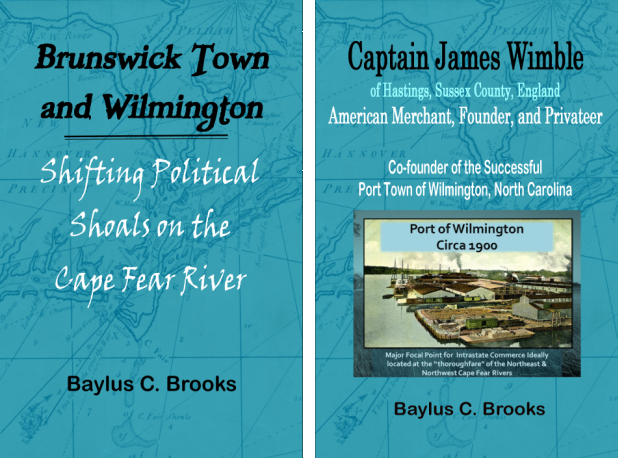
Read about North Carolina's piratical birthpangs in the Brunswick Town & Wilmington affair and the hero that saved the Port of Wilmington from the Family's political opposition, Capt. James Wimble


Both can be found at the author's Amazon page and at Lulu.com

And, coming:


From the author of Blackbeard Reconsidered! 


Monday, February 01, 2016

Are Jacobites Criminals or just Political Protestors?

It was a general practice to raise the British flag (colors) before any ship in harbor fired a salute. To do so without raising colors was considered a violation of proper Royal maritime tradition and a slight against the king or queen. It might also reflect one's political stance, whether conservative or liberal - for the king/queen or against - Tory or Whig. The years following the end of the Anglo-Scottish or British House of Stuart and the beginning of the new German House of Hanover, completely foreign to the British people, caused political reverberations in the Empire that "disaffected" individuals could only safely protest by subtle means, such as not raising colors before a salute - to purposely slight the reigning German monarch. 

Tories, or those conservatives who supported the monarchy over an increasingly powerful Parliament (British Congress), had lately become outraged at the end of the Stuart line in 1713, when Queen Anne died. That supposedly divine Royal line was subsequently replaced by a Whig or liberal Parliament with a foreigner, German George I of Hanover. Some British still saw the monarchy as an extension of God himself and any removal of a monarch by man or any group of men - such as Parliament - heresy. This had been boiling under the surface since the Glorious Revolution in 1688 when the Catholic James II was ousted.

James III - "Pretender"
Adding to the religious-political division since the Hanoverian succession in 1714, German Palatine refugees were flooding England under George's overt support. To make matters worse, George nor his son, George II spoke English. Only George III, the grandson who oversaw the war with Americans in the American Revolution, had grown up in English tradition. 
Queen Anne - Last Stuart Monarch
Parliament's "outrageous" act, placing a German on the English throne in lieu of the rightful successor and son of James II, typically annoyed British conservatives, who again attempted to restore the Stuart line with James III in 1715. This was one of many Jacobite Rebellions (1688-1750s) in which these pro-establishment conservatives suddenly became staunchly anti-establishment revolutionaries against what they viewed as an oppressive government. Many involved in that rebellion were shipped off to America, adding to the growing political division that already existed there. Conservative Jacobites also held court in Rome (the Stuart line held a generally "Papist" or Catholic persuasion) to support their political position and had great hopes that God would restore the Stuart line in England. 

In fact, a great many English favored restoration. Nathaniel Mist, Jacobite polemicist journalist of London's Weekly Journal and suspected author of A General History of the Pyrates, stirred up some trouble from time to time, especially in 1721, but he was largely supported by the general population, even while protected by the crowds while being pilloried in Charing Cross.

Pillory
This all occurred at the beginning of the Golden Age of Piracy, which some have described as a type of Jacobite Rebellion. I, however, would describe it as more of a treasure lust after 14,000,000 pesos worth of silver alone spilled on the Florida shore, just west of the Bahamas, and in easy reach of the wreckers and pirates there, as well as the wealthy privateers and smugglers from Jamaica and Bermuda. A hurricane of July 30, 1715 wrecked eleven Spanish treasure galleons full of three years worth of produce from mines in Mexico and South America. The chance of riches drove the entire Atlantic community mad. This only exacerbated the religious-political division that had developed between Tory and Whig, and largely between England and the American colonies, where pirates virtually ruled their own kingdom.

George I of Hanover
Enter into this political turmoil, the gentleman pirate Capt. Richard Tookerman, wanted in South Carolina for breaking fellow pirates Stede Bonnet and David Herriot from prison in October 1718, stealing money and jewels from William Rhett Jr., stealing horses, forging passes to Virginia, escaping British authorities in Virginia to Barbados, there obtaining the sloop Adventure, stealing slaves and trying to sell them in the Leeward Islands... then, at last back in Port Royal Harbor and while eating lunch with several important grandees of Jamaica, including a colonel of the militia and Mrs. Pendigrass, on the Pretender's (James III - the "Jacobian" exiled Stuart would-be king from England) birthday, June 10th, in 1721, fired a 5-gun salute from Adventure WITHOUT raising colors - TWICE, even after once being warned... all of these things showed himself decidedly to be one of those people "Disaffected toward the king" (the new German king George I), or known as a "Jacobite."

Being Jacobite, however, was merely a political position, much like being a conservative Tea Partier today with a Democrat president. It was not a criminal thing, unless you protested outside of the law, like the rebels sent to the West Indies and the Carolinas.


Port Royal Docks

Once arrested, "friends of the said Tookerman," headed by an ex-Royal Navy Lieut., Thomas Cardiff, attempted to murder the commander of His Majesty's navy in Jamaica, Capt Edward Vernon. Vernon hauled Tookerman to London for trial where the Lord Chief Justice let him go. Tookerman then sued Vernon for false arrest and won the case, resulting in L1200 damages from Vernon.Tookerman then joined his pirate friends Daniel and Thomas Porter in the Bahamas and went on the account again with Bartholomew Roberts. He finally died in 1726, a wealthy gentleman with a namesake who later helped to found a local church in Goose Creek, South Carolina.

You can find more details of this story in Really! Pirates and Tea Party Conservatism

In light of these results, London authorities obviously only arrested suspected Jacobite rebels when they broke the law... similar to the protests of the occupiers of the Oregon federal sanctuary by those sympathetic with rancher Cliven Bundy.

Pirates were largely Jacobite; however, Jacobites, like Tea Partiers in America today, were simply extreme British conservatives; this is certainly not a crime within itself - assuming you don't try to overthrow the government. Whigs and Tories, Progressives and conservatives, even those of the extreme varieties, get along just fine, as long as they don't talk politics. It's like a progressive today barbecuing chicken or steaks with his conservative next-door neighbor when the Carolina Panthers football game is on. Unless one decides to turn pirate and steal all the food, then everyone, Whig and Tory alike, can have a good time and enjoy the game. ;)

--------------------------------------------------
Note that pirate scholar E. T. Fox has disputed some of this article. His article "Jacobitism and the “Golden Age” of Piracy, 1715-1725" in the International Journal of Maritime History describes a bit more seriousness to perceived Jacobitism. It is excellent work and is available here: https://www.academia.edu/772352/Jacobitism_and_the_Golden_Age_of_Piracy_1715-1725
--------------------------------------------------


Blackbeard Reconsidered: Mist's Piracy, Thache's Genealogy on Amazon.com

Today's popular image of the pirate Blackbeard as a bloodthirsty criminal, "a Devil incarnate," has its origins in Nathaniel Mist's A General History of the Robberies and Murders of the Most Notorious Pyrates (1724). Mist's narrative only accounts for the last two years of Blackbeard's life, yet subsequent historians and scholars accepted and promoted this colorful but unsubstantiated image for three centuries. In Blackbeard Reconsidered, historian Baylus Brooks examines the myth of Blackbeard in the light of official government records in Jamaica and Church of England records. This new evidence allows Brooks to present the immediate lineage of Edward Thache, a respected resident of Spanish Town, Jamaica, and to place the gentleman's actions within an accurate historical context that successfully challenges the violent image of Blackbeard.


Was Blackbeard a GENTLEMAN? Historical records show feared pirate was actually an aristocratic family man who gave up his wealth to help his brother and sister